Wednesday, February 10, 2016

The One Year Mark

The one year mark for PC volunteers is a milestone with heavy significance. It shows how far we’ve come in our service, from the first day stepping off the clueless about Burkina to becoming a tenured volunteer who can handle any diverse situation. We’ve all been through a lot in the past year. The move to village, finally all alone in a foreign land, was a big one. The first “real” conversation in the local language was rewarding. When the project that has been taking months to implement finally came to fruition, it was a good feeling. And then the one year mark comes along and we realize that we are (nearly) half way done with our service. Initially, it’s a sense of relief because we have 15 long months left to use our acquired knowledge and get stuff done. But then it dawns that the remaining time is in fact too short, especially after we’ve digested the magnitude of problems in our village that need attention.

(All pictures will be after the text, since I don't have enough time to inter-crops the photos throughout the post).

All this being said, I’m content with myself and the work that is happening in Ramsa. Yes, the remaining time is short with too many things to do. This means one thing: prioritization. I initially wanted to do tons of projects (because I saw their potential worth and success) but now it’s about narrowing down to the sustainable few that will last after I leave. One thing’s for sure, if by this time the community is not motivated in a certain area, best let it go. The community’s motivation, participation and ownership is the vital ingredient to any Peace Corps for it to carry on. That being said, I’m excited for my community and I to narrow our focus and really build-upon the select few projects that interest us.

Before the turn of the New Year, we finally finished the construction of our new garden space. Fast-forward to today and you’ll see that the garden space is filled with sprouting leaves and growing trees. It’s a warm feeling knowing that our first endeavor is done and is working. I’ve been coming to the garden space as much as possible, even as my work there is slowing down. The evenings are the best. Entire families come-out to tag-team the watering of their plants or to do some weeding. The scene is quite fulfilling.

I told my counterpart and community that this project will never be finished, since we must always be looking for ways to improve what we have. This mainly speaks to the moringa trees (because of their vast economic benefits and ever-growing market), but gardening techniques and maintenance must always be improved as well. Once we finish digging and cementing the new well, the garden will officially be done and completely in the hands of the community.

My buds and I, as much as we love Burkina, decided to take a trip over new years to the Ivory Coast. We had a solid crew of 5 and we took the 34 hour train ride from the landlocked country of Burkina all the way down to the beach. I never knew how much joy the ocean would give me. After not seeing it for a year I knew the reunion would excite me, but not as much as it did. I spent an average of 5 hours each day in the water, just to let my body recharge. It was a treat traveling with my fellow PCVs because they appreciated everything just as much as I did. Unbeknownst to us, we carried our already engrained Peace Corps mentality with us to the Ivory Coast. At all times we were searching for locals to integrate with or hole-in-the-wall restaurants to find a cheaper meal. Eventually, the 10 day getaway came to end and we were back in Burkina.

A few weeks after our return, the horrible terrorist attacks in the national capital took place to much dismay. Burkina’s had a shaky couple of years, with the coup d’états and other danger in the region, but we ended 2015 on a positive note after democratically electing the first President in 27 years. The attacks in January reintroduced the doubt about Burkina and the West African region that everyone thought was on its way out. My fellow volunteers and I were saddened and shocked, and thought that there would be some action taken as to our situation in Burkina. Ultimately after much discussion, the Peace Corps HQ decided to let the Burkina mission remain intact, albeit with heightened security parameters and condition. Now, it is very difficult for volunteers to come to Ouaga unless for an emergency. It’s going to be like this for some time. Our safety situation is definitely more dangerous than before, but I am confident that the Bureau is taking all necessary measures to ensure our safety. The minute that they believe that they cannot guarantee our safety in country, we’ll be on the next flight home. Until then, all of us are safe in village going about our business and continuing with our Peace Corps work.

I’m at ease that we’re here for the (near) future because this part of my service is when my productivity is at its all-time high. Personally, I’ve reached a level with my local language, community integration and applicable knowledge to serve my community at my full potential. My counterpart and other core colleagues in village all have a solid understanding of our on-going projects and what we can achieve in the next year. With the moringa/community garden as our primary, on-going project, there are a few other areas that we are going to focus in 2016. Soy, animal feed, malaria and other small trainings by community demand. I’ll elaborate more on these other projects as they come about (we’ve started recently with our soy trainings and their popularity is sky-rocketing!). Of course, I’ll still have my own personal work that I’m doing at our middle school with my students.

February will be an activity-filled month for me and will also mark the unofficial end of “cold” season. March the temperature will be turned-up a bit before it hits full blast in April and May. Can’t wait.

Besides that, life is easy now. During my first year I found that after around 2-3 weeks in village I’d be itching to get-out and unwind with some friends far away. Now, it’s the opposite. Not that I don’t enjoy seeing my friends and eating good food, but I’m trying to plan my schedule so that I can spend as much time in village as possible.

Hope you enjoyed this post. I know it’s been a while between entries. I seem to have adopted the Burkinabe perception of time now, i.e. always late. But, you know what they always say…"Ca va aller". Everything will work out just fine.

Until next time,


MB


Getting ready to board the 34 hour train from Ouagadougou to Abidjan. Worth it.


The first of many beers on New Years eve in Abidjan. They served beers in 1 liter bottles. Needless to say, it didn't take many to get where we were going.


We were all super bummed to be away from Burkina.


New Years Eve dancing. We tried to get the Ivorians to dance with us. Instead, they opted to film the crazy white people while they danced by themselves. We've learned to play the fool after living in Africa for a year already.


Partying with locals is the best. The guy on the left was a bit of a creeper however.


Henry and me. Water, sand, palm trees for miles.


MVP of the trip: GoPro


Our hotel guide took us on a canoe ride of the lagoon. 


Surfing with our bodies.


Fresh fish in Ivory Coast. I bet even people in the US are jealous of this picture.


Last night we roasted hot dogs and marshmellows on the beach. 


Couple days after getting back to site and already back to work. The start of our compost training, taking place in our new garden. My neighbor is the government farming agent and we partnered with him to run this training. 


It took soo many weeds/hay to fill up this pit. It's a lot of hard work to fill and maintain, but the finished product's value is so valuable. Everybody is in need of a compost pit but not many people are able to, for many reason.


My farming agent finishing up the training. Pictured is the second compost pit, which we use to turn-over the pit so that the weeds on top can then decompose once on bottom.


Had the awesome opportunity to take two counterparts with me to a soy training, led by the Peace Corps. 


We learned a good deal about soy. Afterwards, we knew that we had to share this plethora of knowledge back with our community so that everybody could benefit from this nutritious product!


How I travel to my regional captial from my village and back. In the back piled on top of a bunch of cargo. My entire body is covered in dust by the time the journey finishes.
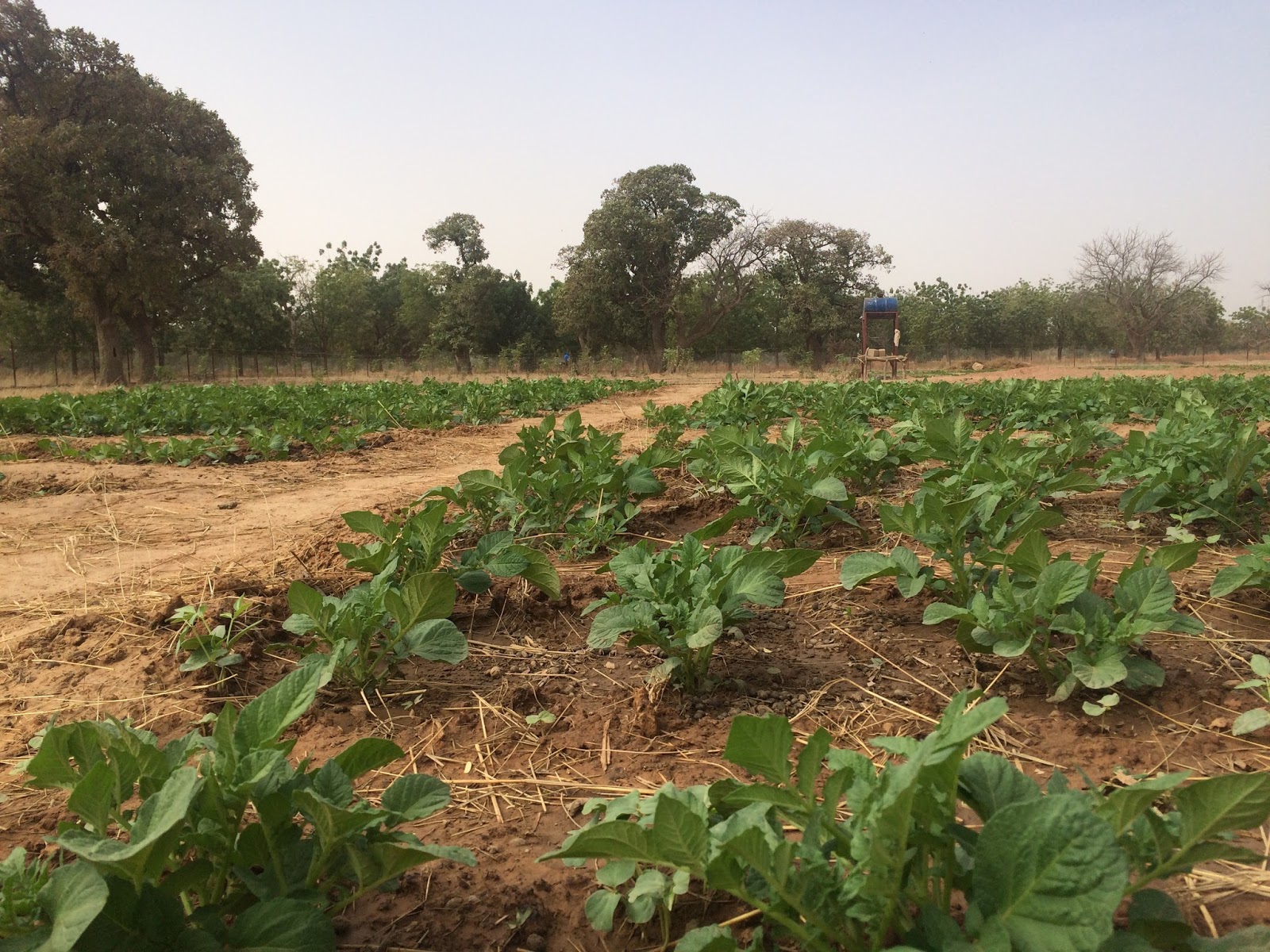

Potatoes sprouting up in our garden space.


Gardening season means vegetables. Tuna sandwich with carrots is my favorite meal in village.


Lettuce coming in little by little.


Just a week after returning from our training, we held our own village training on the importance and transformation of soy into tofu, yogurt and gateau. We only started 2 hours late with the majority of participants showing up midway through.


Mixing the soy flour. Once the women understand the procedures, the cooking part is easy for them. They could stir and mix until it is nice and pure.


After adding the congealing agent, the tofu appeared ontop. Then, we scooped it out and pressed until all the water left. In the local language, we have to call tofu "meat". So, when I was telling everyone that this concoction that we were taking-out was meat, they were very confused.


Tomato season also means that it is perfect time for tomato paste jarring. This was a great training because I was on my own (counterpart was busy) so I led the entire day in Moore. Boiling the jars before and after is important for a lasting conservation, because it kills all of the germs. 


Finished product! The ladies already sold a few jars to the government workers in our village.


Community Garden of Ramsa (with) vegetables and moringa. Year of completion 2015


Started digging of our new well which will allow us to garden year round. Moringa trees growing in the background.


I've been working with the local restaurateur in village to improve his bread. I introduced a new recipe and it's been selling like crazy. Here, his apprentices showing the uncooked bread before it goes into the oven. 


Souleymane making the loaves. He believes that I'm a bread expert, even though I got the recipe from a fellow volunteer and looked up the rest online. The power of information!

Sunday, December 27, 2015

December

The past month in photos. Too lazy to write in-depth about any deep Burkinabe issue present in my site so for now I'll just present my iPhone pictures from the month of December.


I mentioned to my fellow teachers that I was digging some holes in my courtyard to plant trees. The earth in my courtyard is all rock so it's very taxing to dig. So, the next day a group of my students showed-up to help dig. Everyone loves to help me with anything I need and never ask for anything in return.


A list of the Presidential Candidates. The man on the right, second from the bottom ended up winning. It's going to be interesting watching his presidency unfold since he was a big player in the former presidential regime and only pulled-out a couple years before the coup.


The MPP political party held a rally just outside my house. It seems like there was a political rally every other day before the elections, even in my remote village.


The historic day. The first democratic elections in Burkina Faso. The elections were held in our primary school and almost every single villager came out to vote.


The start of our nutrition and moringa trainings with our women's savings groups. My job is to empower my counterpart, which is why I let him do all the work :)


My counterpart's new baby boy, Laurent. 


I needed to make some natural insecticide so I sent my little posse out into the bush to find some "Neem" tree seeds, which have a very strong smell. We then transformed it into a natural insecticide for our moringa trees (chemical free!)


Spraying our trees. 


I went to visit a village nearby to present our organization and potentially start a new savings group. It was an all Muslim village, so no drinking is allowed. During the middle of the meeting, the old village chief flashes this beer to be and asks if I drink beer. I said yes, and together we sat there drinking warm, canned beer. A unique experience.


The local Crocodile in Ramsa. There are women washing clothes and children playing in the water just 50 feet away. But, the crocodile is Ramsa's totem so they treat it sacredly.


A picture of my English class. At the end of the trimester I paired-up with a teacher in Vermont and started a Pen-Pals project. This is a picture of my students receiving their first letters. They were really stoked to have an American interested in their life. Writing the response letters was a tough project but we got it done. Funny questions like "Do you like Black (people)?" or "What do you farm?" were a constant within these letters.


The start of our moringa and community garden project. The entire project took us a week and we finished without too many problems. Here we are digging the foundation where we put the fencing.


After we placed all of the iron fencing posts, and shortly thereafter the fence.


Then we put the cement. This part took 3 days to cement 240 meters of fencing.


Everyday we took a break at midday to eat some beans and rice. No soap, no spoons no problem. Everybody just digs in and feasts.


After the fencing was installed, we put our first drip irrigation system. This technology is pretty cool and will water our 500 square meter surface just by filling one water barrel.


Another view of our drip irrigation system. We are going to install two more after I return from the Ivory Coast in January.


The 22nd of December, my friend and I went to Eastern Burkina Faso to visit our good friend and help out with his first big project. We held a cabbage festival to promote the vegetable sales of his small village, where they sell at better prices then the bigger regional market 5 km away. The festival was crazy. There was dancing, feasting and plenty of drinking. Here I am with my good buddy Cameron sipping on some dolo.


Cameron, Henry and I having a beer at the end of the festival. We worked a lot just keeping the festival running, but we always found time to sit back and have a cold one.


Our favorite little villager. Always looks like he was just...can you guess?

Hope you enjoyed these pictures.

Until next time,

MB

Tuesday, November 17, 2015

Back to School

The end of the rainy-season is finally here. All of the villagers are transitioning to harvesting and subsequently drying their crops, which they will eat/sell over the next year. School finally started the second week of October and once again I’ll be teaching English (this time only 1 class, not 3 since I have to commit more time to my other business projects). I’m with the quatrième students (which is their 9th year in school) who have already had two previous years of English instruction. Even though their English level is novice at best, the fact that they are in their 9th year of school signifies that they are strong students who have endured all the way to this year in school. I gave them a pre-test the 2nd week of school to gauge their initial English levels and hopefully by the end of the year they will have improved.


A picture of my house in its entirety. Far left is my shower/latrine, middle-left is my hand-washing station and to the far right is my front gate. Took this at the end of the rainy season standing in my neighbors courtyard.

Before school started, my school director and I discussed the most pragmatic class for me to teach. We opted for the 9th year class because I will be able to speak more English with my students instead of just teaching them in French. Having them hear my authentic English accent will train them on the correct pronunciations and sentence structures. Before school started I unrealistically wanted to only speak English and implement an “immersion” style course, where the kids would eventually pick-up on English due to the fact that it would be the only language that I speak. However, a month into class I find it difficult to do this because explications in French are almost always necessary for complete comprehension of my lessons. Later on in the academic year I’m sure I’ll switch to more English.


When living in a weakly fortified house in Africa...(There were four in total in one night)

Overall teaching is going great so far. My much smaller class size and easy schedule gives me something to do each week, yet leaves ample time to work on other projects. I’m also holding office hours and English club each week to let students ask questions 1-on-1 as well as do some cooler activities in English (last week we translated and learned the lyrics to “Tree Little Birds” by Bob Marley, which they thought was super fun).  My students are responsive; not too much baby-sitting going on which makes it more durable for me. To make things more interesting I split my class into teams and award points for various accomplishments with a “special” prize awaiting the team with the most points. My students love this. It’s a great way to “hack” students into learning and participating more in class. They are doing all this extra work to win points for that prize at the end, but what they don’t know is that they are actually learning English at the same time haha!


I went to my neighbor Sarah's village to help set-up a hand-washing station for her family compound (She's an English Teaching Volunteer who lives 7km from me). Washing hands with soap properly seems like an elementary activity yet many kids here didn't know how to. We then did a mini training with her family on how to wash hands with soap and why it's important. Not only is it dirty here, but people wipe after going number 2 with their hands as well as eat with them, but most don't use soap. Such a simple project with such large benefits.

Going back to school to the school environment has been good so far, but it also reiterates to me how hard it is to succeed with academics here in Burkina Faso. I often look back to my upbringing to recap my educational experience and what was available to me as a student. I had parents who read to me at night, top-notch schools with highly-trained teachers and all sorts of external resources to help further my academic studies. In Burkina, and especially in smaller villages such as Ramsa, the educational experience is almost the exact opposite of mine. First, they must undergo schooling in French which is not their native tongue. French is never spoken in the household which makes it hard for students to learn the language. Even some of my 9th year students have trouble speaking basic French. There are no books (academic or novels) so students can only learn from what is written on the chalk-board. Their informational intake is very limited in this respect. At the household level, parents aren’t involved on a daily basis with their children’s studies. It’s tough because most parents don’t speak French but even so they typically don’t give any motivation or follow their students’ progress. Instead, I mainly hear parents calling their kids “stupid” when their studies are failing, instead of encouraging them to do better. And finally, the school environment isn’t a very positive place that doesn’t foster both education and personal development. Most teachers didn’t want to be teachers when choosing their professions. They wanted a government job with a salary, so they decided to settle for teaching since there are many openings. I’ve had many talks with my teachers and they are all concerned with the development of their country and all agree how important education is, but when I see them in class it’s hard to agree that their teaching methods are efficiently contributing to the country’s human development. Almost all teachers yell and shame students not only if they misbehave, but if they try and are incorrect. This makes students extremely shy and timid. As a result their public speaking skills and overall confidence at low levels. I don’t think physical violence is a daily practice but I’ve seen it happen a few times. This last part definitely derives from the “hitting” culture here, where parents hit their kids daily and kids hit each-other just as much. Hitting would cause an outrage in the States but here it’s so common that women often joke about which of their actions would make their husbands hit them.


Hanging-out with my Village Chief drinking dolo. He's an extraordinary Burkinabe.

I’m doing my best to change this culture little by little. I tell my colleagues the importance of positive discipline and how physical violence is not effective. But most importantly my changes are taking place in my classroom. I give participation points to those who volunteer in class, even if they’re wrong. If someone laughs at another for making a mistake, I put them in their place. I talk about the importance of school and how with hard-work and determination anything is possible. Writing this blog it’s so apparent the cultural differences between our countries. Back in the US we do everything for our kids to give them the best chances to succeed, but here in Burkina hardly anything is being done. A kid’s success in life is almost solely dependent on themselves. I wish it wasn’t like this. But, as most development practitioners know the biggest roadblocks are often cultural.


My English class taking their first test. 48 kids in total.


Maybe my student has the words "father" and "great-great-grandfather" mixed up haha. Whatever the case, 115 years old and still a farmer? Impressive.


After my students finished their tests I told them to draw on the back. One of my favorite students left me this note. He also got a 100% on the test. It's little things like this, appreciation and seeing improvement, which make this job worth-while.

Outside of the educational sphere, my CED related work is starting to pick-up. The moringa garden is almost underway once we cement in the fencing to the ground. Our soybeans are in the process of drying and afterwards we will start out tofu transformations. My counterpart and I are also preparing a multitude of other trainings to present to our saving’s groups which will take place over the course of the dry season. One thing that particularly excites me is the heightened interest in opening a village pre-school. I’ve shared with my community that other volunteers have started local pre-schools/kinder-gardens to help prepare children before entering primary school. We would teach them some basic writing skills, basic French, classroom behaviors, motor-skills and other activities to make the transition easier. It would start-out very small and informal with the potential to grow in size and legitimacy. It would be great to see this particular project come to fruition since as show in the paragraphs up above, the educational situation here in Ramsa needs all the help it can get.

In other news, it’s still blazing hot during the day but at night it’s finally getting cold! I finally slept inside my house for the first time by choice since coming to Ramsa. Group 29 (the volunteers who came in October 2013) are finally leaving back to the US which makes my Group 31 officially “juniors”. It’s crazy that I’ve already been here for 10+ months. I know that they next 17 months will go by even faster. Trip to the Ivory Coast hopefully just after Christmas.

Hope all is well back in the US.

Until next time,


MB